Ditch the old, embrace the bold
Choosing the right customer experience software is not just another procurement task. It is a major decision about how your business will listen to customers, respond to problems, and turn insight into action.
But the term “CX software” covers a lot of ground: customer feedback platforms, VoC tools, help desks, journey analytics, and workflow tools all get thrown into the same bucket. This guide will help you separate the categories, shortlist the right options, and avoid expensive mistakes.
Forget tired survey methods and shiny demos. The right platform should surface problems early, help teams act quickly, and support measurable improvements in customer retention, service quality, and compliance.
Imagine customer feedback that:
- Speaks directly to your bottom line
- Surfaces insights before problems explode
- Guides strategy with crystal-clear precision
Ready to revolutionise how you listen, learn, and leap ahead? Read on…
What is customer experience software?
Customer experience software is any platform that helps you understand and improve what customers experience across key touchpoints. That usually means a mix of collecting feedback, spotting strengths and weaknesses, and helping teams act on what they learn.
That sounds simple, but many buyers run into trouble because several different software categories get labelled as “CX software”:
- Voice of the Customer and feedback tools collect surveys, comments, and scores such as CSAT, NPS, and CES.
- Service and case management tools help frontline teams manage conversations, tickets, and issue resolution.
- Journey and analytics tools help you understand behaviour across touchpoints, channels, and customer segments.
- Action and workflow tools make sure insight leads to follow-up, accountability, and improvement.
Some platforms cover more than one of these jobs. Very few do all of them brilliantly. That is why the first question is not “which customer experience platform has the most features?” but “how does OUR organisation plan to get an ROI on CX?”
Which type of CX platform do you actually need?
The phrase “customer experience software” gets used far too loosely. In most buying processes, firms are really choosing between four different things:
1. A help desk or case management platform
If your problem is that customer issues are coming in, but your team cannot log, assign, escalate, and resolve them properly, start there.
This kind of platform is built to manage work. It is not primarily built to tell you how customers feel, which parts of the journey are failing, or which issues are damaging retention before they become tickets.
Think of tools like Zendesk or Help Scout.
2. A CRM with some service features
If your top priority is account visibility, pipeline management, or keeping commercial and service records in one place, a CRM may be the right centre of gravity.
But CRMs are often weak as Voice of the Customer systems. They can store a score or a comment, yet still do a poor job of collecting high-quality feedback, routing urgent responses, or turning verbatim comments into actionable insight.
They are also often configuration-heavy. That can create an internal burden: simple changes end up needing admin time, external consultancy, or a place in an already-crowded systems backlog, which makes continuous improvement slower than it should be.
The obvious example here is Salesforce.
3. A journey analytics or digital analytics tool
If you already know plenty about operational performance, but you cannot see where customers drop off, repeat contact, or struggle online, analytics software may fill that gap.
That is useful, but it still leaves an obvious blind spot: analytics can show you what customers did, while feedback helps you understand why they did it.
Think of tools like Contentsquare.
4. A Voice of the Customer platform
If your real problem is one of these:
- You are not collecting feedback at the right moments in the journey
- Customers raise issues, but nobody follows them up quickly enough
- Insight gets trapped in dashboards instead of changing behaviour
- Teams argue about scores and metrics because they lack context from real customer comments
- You need better evidence for retention, improvement, or compliance
…then you are not mainly buying a help desk or a CRM. You are buying a proper VoC capability.
That is the space CustomerSure is built for: collecting meaningful feedback, surfacing risk early, helping teams respond to customer feedback, share feedback with the people who can act on it, and turn comments into measurable service improvement.
Razor-sharp goals: your strategic north star
The market for customer experience know-how and software is crowded and noisy. Make sure you’re driven by what’s most important – start with clear objectives so you don’t fall victim to the latest vendor of (expensive) shiny things.
We’ve been brought in to help many CX projects which have bought in an expensive and complex platform… But without clear objectives and foundations, the project team are struggling to deliver value to customers, and thus value to the business.
And beware seductive vanity metrics. Are you concerned too much with punchy response rates and charts that only go upwards? Be ultra-selective so your KPIs only measure factors that customers value.
Your customer feedback programme isn’t a side quest. It’s a strategic weapon.
The real power lies in using every insight to directly drive your core business objectives, so resist the urge to create additional, effort-sapping survey goals. Your feedback should be a heat-seeking missile targeting your most critical business objectives. Typically that’ll be things like:
- Revenue growth
- Customer retention
- Product and service improvement
- Competitive differentiation
- Regulatory compliance
And don’t get distracted by what other companies are doing. Your business is unique. Your feedback strategy must be too.
Stay focused. Stay ruthless. Let your business goals be your only compass.
<img src=“/assets/img/guides/this-is-customer-satisfaction.webp” alt=“Photo of some graphs, captioned “this is not customer satisfaction”, paired with a photo of a happy man with this thumbs up, captioned “this is customer satisfaction"" />
Key features to look for in customer experience software
The Non-Negotiable Requirements
Measuring key touchpoints: Your Feedback Lifeline
Forget isolated surveys, haphazard analysis and disconnected systems. Your feedback tool should work like a silent, powerful partner — automatically triggering alerts at important steps in the customer journey, highlighting strengths and weaknesses, and catching issues before they become crises.
Customer-First Design: Make Responding Effortless
Brutal truth: Customers hate long surveys.
They want quick, painless interactions that respect their time. Your feedback mechanism should feel like a breeze, not an interrogation.
Swift Follow-Up: Turn Feedback into Action
Not all feedback is created equal. Some responses demand an instant response if you’re to save customers at risk. Others need sentiment analysis, topic extraction and strategic thinking. Your system must be nimble enough to distinguish and act accordingly.
Integration and data flow
The best customer experience software does not operate in isolation. It should connect cleanly with your CRM, help desk, telephony, or BI tools so that customer context is shared, manual work is reduced, and insight reaches the people who can act on it.
Governance, security, and auditability
If your software will be used in regulated sectors, across multiple teams, or with sensitive customer data, permission controls and audit trails are not optional extras. They are core buying criteria.
☠️ Danger Zone ☠️: Requirements to Ruthlessly Eliminate
Complexity Kills
You’re measuring satisfaction, not running a clinical drug trial. Overcomplicated surveys repel customers. Lots of conditional logic might look clever, but it destroys response rates faster than you can say “delete”. There’s a balance to be drawn, but if you’ve a long list of question types and response scales on your wish list, you risk being your own worst enemy.
Benchmarking Trap
There can be great value in benchmarking some things, but not satisfaction scores – they’re subjective not objective. How does it benefit you to know how your satisfaction scores compare to others? It doesn’t give you any actionable data. Instead, focus on what actually matters: improving YOUR customers’ experience of specific, measurable things you do that are important to them. Benchmark these objective performance measures as much as you like.
Category confusion
One of the easiest mistakes to make is buying a CRM, help desk, or analytics layer and assuming it will automatically solve your VoC problem. Sometimes you need a broader stack, not a single silver bullet. Be very clear about which jobs your shortlisted platform does well, and where you will still rely on other tools.
The take-away is clear: Focus. Simplify. Deliver.
Finding and Evaluating Suppliers – 6 Killer Questions
Choosing a feedback supplier isn’t just about ticking feature boxes. It’s about finding an ally who you trust to help you drive your customer experience forward, and who you’ll enjoy working with.
- Skin in the Game: Are They True Partners? Forget salespeople chasing commissions. You want a supplier obsessed with your success — one who wins only when you win. Ask yourself whether you’re talking to an expert or an order taker.
- Knowledge with Empathy: The Hallmark of a True Partner Expertise without humanity is just noise. The right partner challenges you not to prove how smart they are, but to help you become better. They’re direct, but never dismissive. Challenging, but never condescending. Look for the partner who speaks truth with kindness — who sees your potential and knows exactly how to unlock it.
- Proof, Not Promises: Demand war stories. Real references from businesses who’ve transformed their customer experience. “Introduce me to your customers. Show me the results.”
- Outcomes, Not Outputs: Satisfaction scores are a means, never an end. Happy customers and rock-solid retention? That’s the real currency.
- Seamless Integration, Zero Friction: Your new solution should slide into your ecosystem like it was always meant to be there. No clunky workarounds. No painful migrations.
- Return on Investment (ROI) Baked In: Is it clear how the software will deliver bottom line benefits? And is the pricing transparent and cost effective for your business?
Before you book demos, build a simple shortlist scorecard. At minimum, compare each vendor on:
- Primary use case fit
- Channels supported
- Integrations with your existing systems
- Closed-loop workflow and alerting
- Reporting, segmentation, and AI analysis
- Security, permissions, and audit trail
- Implementation effort
- Total cost of ownership after year one
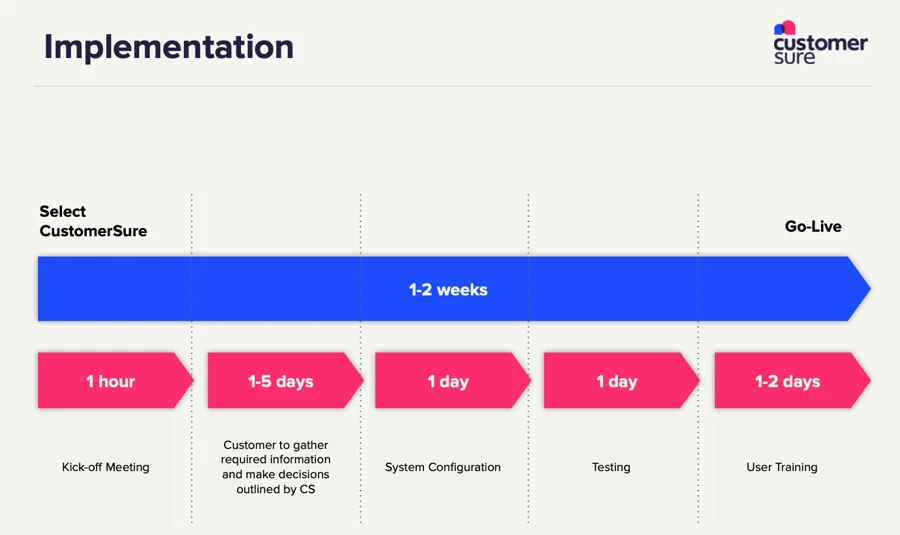
Implementing Your Customer Experience Management System
Implementation Approach
Successful deployment of a customer feedback system requires a methodical, thoughtful approach, but it needn’t be hard or complicated. By following a structured implementation plan, you can maximise the value of customer insights while minimising project effort and risks.
The critical success factor? Think through how you’ll deal with feedback before you turn the taps on. Otherwise you’ll immediately disappoint customers rather than improve their experience.
Implementation Roadmap Checklist
1. Establish Clear Objectives and Governance
- Ensure CX goals feed in directly to overall business objectives
- Define specific, measurable outcomes in terms of tangible customer benefits
- Assign clear roles and responsibilities, spanning all teams & functions to avoid silos
- Create accountability for follow-through. Who’ll catch customers at immediate risk of leaving? Who’ll capture and manage ideas, systemic problems and action plans?
2. Software Configuration and Selection
- Choose tools that prioritise simplicity and actionability
- Avoid the excess cost of feature bloat and unnecessary complexity
- Ensure seamless integration with existing systems
- Focus on platforms that deliver rapid information and insights which are tailored to customer-facing roles, not just analysts
- Check for GDPR and data protection compliance – especially regarding AI usage
3. Phased Deployment Strategy
- Begin with a focused pilot program
- Select a discrete business area led by someone who’s an enthusiastic customer champion to run the initial implementation
- Use the initial deployment to gain confidence and refine processes
- Gather internal learnings before broader rollout
- Build organisational confidence through incremental success. Aim for a ‘pull’ from people who see how it can help them do their job better, rather than a ‘push’ by you of yet another system they have to use
4. Comprehensive User Enablement
- Develop targeted training programs for users
- Equip teams with the skills and knowledge of how feedback facilitates business goals
- Create clear guidelines for feedback management – never leave customers feeling ignored
- Foster a culture of continuous learning and improvement – schedule periodic reviews.
5. Feedback Loop Management
- Establish protocols for rapid issue resolution to improve satisfaction and retention
- Create transparent communication channels so that customer comments help everyone do their job better
- Demonstrate commitment to customer experience by responding rapidly to cries for help
- To encourage future responses, show customers that their input drives meaningful change
Critical Success Factors for a CX improvement project:
- Customer Orientation: A culture of genuinely caring about customers is key. Organisations focused on hammering sales over delivering great service will struggle to succeed with feedback systems.
- Ownership: Identify customer champions within your team. Individuals who are passionate about customer experience can drive engagement and outcomes.
- Incremental Rollout: Build confidence through gradual implementation. Successful pilots encourage wider adoption and generate momentum across the organization.
Potential Implementation Risks:
- Avoid chasing the wrong metrics. Net Promoter Scores or customer satisfaction ratings should be measures, not standalone targets. Counter-intuitively, Goodhart’s Law teaches us that feedback programs should not aim for high scores as their primary goal. Customers don’t benefit from higher scores; rather, scores are evidence of great service. Focusing on these as targets leads to wasted effort and can disconnect the program from business objectives.
- Prevent survey (and reminder) fatigue.
- Prioritising Response Rates: High response rates may seem important but can lead to misaligned priorities. Is pestering customers with reminders consistent with improving customer experience? There’s a better way.
- Be vigilant in verifying data quality. Ensure accuracy and personalisation. Errors like misspelled names can alienate customers and undermine trust – the opposite of what you’re aiming for in a customer experience project.
Conclusion
Successful customer experience management is an ongoing journey of listening, learning, and adapting. By approaching implementation strategically and maintaining a customer-first perspective, you can transform feedback into a powerful driver of business growth.
Why Choose CustomerSure to Transform Your Customer Experience?
At the heart of our approach is a commitment to fresh thinking and common sense in the pursuit of improving customer satisfaction. Unlike the tedious and uninspiring surveys you’ve likely received, our method is designed to feel like a breath of fresh air — for both you and your customers.
We take a radically different approach compared to most companies. Our focus is on making feedback an exceptional experience for your customers, not just a data-gathering exercise for your business. Why? Because when you put customers first, the benefits to your business naturally follow. Better experiences drive higher satisfaction, stronger loyalty, and measurable growth.
Here’s a thought: what if you treated customer feedback as a service you offer customers rather than work you ask them to do for you? A way for them to tell you what you need to do to keep their business? By flipping the traditional model on its head, you not only improve your customers’ experiences but also unlock insights that genuinely move the needle for your business. It’s a win-win — but it requires seeing feedback through your customers’ eyes.
The traditional way of collecting customer feedback is broken. Long, convoluted surveys that show up at the worst times don’t serve anyone. They frustrate customers and lead to silence — or worse, resentment. Even when customers take the time to respond, they’re often met with radio silence from the company they’re trying to help.
That’s not just ineffective — it’s damaging.
And here’s the kicker: the companies running those outdated methods think they’re doing it to improve customer experience. The irony is, they’re doing the opposite.
We’re here to change that. Our software and approach are built to do a better job—for you, your team, and your customers. Together, we’ll turn feedback into a tool that doesn’t just measure satisfaction but improves it in meaningful, lasting ways.
To discover more and receive tailored advice, book a discovery call.


